Showing posts with label Transportation. Show all posts
Showing posts with label Transportation. Show all posts
Thursday, May 1, 2014

In
Transportation
//
//
Leave a Comment
Planning and Design of Airports (5th Edition) by Robert Horonjeff,Francis X. McKelvey,William J. Sproule,Seth B. Young

In the preface to the fourth edition of this text, the late Dr. Francis McKelvey remarked that the technological and legislative developments related to the air transportation industry in the 1980s and early 1990s were of such significance that an updating of the book was needed. The fourth edition, published in 1994, enhanced previous editions, the first of which was published in 1962.
In the 16 years since this last update, it may be said that the changes to the practice of airport planning and design have been more significant than in any other era in the history of aviation. Implementation of twenty-first-century technologies has resulted in the first major overhaul to aircraft and air navigation systems in generations, computer-based analytical and design models have replaced antiquated monographs and estimation tables, and highly significant geopolitical events have all but rewritten the rules of planning, designing, and operating civil-use airports.
In
Transportation
//
//
Leave a Comment
Traffic and Highway Engineering (4th Edition) by Nicholas J. Garber & Lester A. Hoel
Traffic and Highway Engineering, Fourth Edition, is designed for students in engineering programs wherecourses in transportation, highway, or traffic engineering are offered. In most cases, these courses are taught in the third or fourth year but are also covered at the graduate level. This book also is designed to serve as a professional reference.

Thus, the objectives of this textbook are:
- To be a contemporary and complete text in highway and traffic engineering that can be used primarily at the undergraduate level. It may be used at the graduate level for courses that emphasize highway topics. Due to its complete coverage of the material, the textbook is designed for flexible use in developing a single course or for use in two or more courses.
- To serve as a reference for engineers in the highway field and as a study guide for use in preparing for the professional engineering license exam, review courses, and preparation for graduate comprehensive exams in transportation engineering.
In
Transportation
//
//
Leave a Comment
Concrete Pavement Design,Construction & Performance by Norbert Delatte

Concrete pavements have been used for highways, airports, streets, local roads, parking lots, industrial facilities, and other types of infrastructure. When properly designed and built out of durable materials, concrete pavements can provide many decades of service with little or no maintenance. “Concrete generally has a higher initial cost than asphalt but lasts longer and has lower maintenance costs”.
In some cases, however, design or construction errors or poorly selected materials have considerably reduced pavement life. It is therefore important for pavement engineers to understand materials selection, mixture proportioning, design and detailing, drainage, construction techniques, and pavement performance. It is also important to understand the theoretical framework underlying commonly used design procedures, and to know the limits of applicability of the procedures.
In
Transportation
//
//
Leave a Comment
Highway Engineering by Martin Rogers

Given the problems of congestion in built-up urban areas, maximising the efficiency with which highways are planned, analysed, designed and maintained is of particular concern tocivil engineering practitioners and theoreticians. This book is designed as an introductory text which will deliver basic information in those core areas of highway engineering of central importance to practicing highway engineers.
Highway Engineering is intended as a text for undergraduate students on degree and diploma courses in civil engineering. It does, however, touch on topics which may be of interest to surveyors and transport planners. The book does not see itself as a substitute for courses in these subject areas, rather it demonstrates their relevance to highway engineering.
Highway Engineering is intended as a text for undergraduate students on degree and diploma courses in civil engineering. It does, however, touch on topics which may be of interest to surveyors and transport planners. The book does not see itself as a substitute for courses in these subject areas, rather it demonstrates their relevance to highway engineering.
In
Transportation
//
//
Leave a Comment
Handbook of Transportation Engineering by Myer Kurtz

Transportation systems of regional and national extent are composed of networks of interconnected facilities and services. It follows that nearly all transportation projects must be analyzed with due consideration for their position within a modal or intermodal network, and for their impacts on network performance. That is, the network context of atransportation project is usually very important. Thus, it is appropriate to begin a volume on transportation engineering with a chapter on national transportation networks.
Download
In
Transportation
//
//
Leave a Comment
Pavement Design and Materials by A. T. Papagiannakis and E. A. Masad

Download
In
Transportation
//
//
Leave a Comment
Highway Engineering Handbook by Roger R. Brockenbrough

Environmental issues play a major role in the planning, design, construction, and rehabilitation of highways. Indeed, their prominence has grown as the public has become increasingly informed on environmental issues and associated requirements. This chapter provides an overview to lend guidance in understanding environmental issues, and information to aid in the process of effectively addressing the various requirements in this area. It begins with an overall review of the numerous federal laws and regulations that must be considered. A thorough discussion is provided of the requirements of the National Environmental Policy Act and the preparation of environmental impact statements. Information is presented on the important topics of storm water pollution prevention and lead-based paint removal and containment. The chapter concludes with a discussion of resource recovery and the use of waste material, including the recycling of hazardous wastes.
Tuesday, March 25, 2014
In
Civil Books,
Transportation
//
//
Leave a Comment
Special Topics in Earthquake Geotechnical Engineering

Geotechnical Earthquake Engineering and Soil Dynamics, as well as their interface with Engineering Seismology, Geophysics and Seismology, have all made remarkable progress over the past 15 years, mainly due to the development of instrumented large scale experimental facilities, to the increase in the quantity and quality of recorded earthquake data, to the numerous well-documented case studies from recent strong earthquakes as well as enhanced computer capabilities. One of the major factors contributing to the aforementioned progress is the increasing social need for a safe urban environment, large infrastructures and essential facilities. The main scope of our book is to provide the geotechnical engineers, geologists and seismologists, with the most recent advances and developments in the area of earthquake geotechnical engineering, seismology and soil dynamics.
Download
Code
http://www.4shared.com/office/6TNbR1yvba/9400720599.html?
In
Civil Books,
Transportation
//
//
Leave a Comment
Earthquake Geotechnical Engineering Design

Pseudo-static analysis is still the most-used method to assess the stability of geotechnical systems that are exposed to earthquake forces. However, this method does not provide any information about the deformations and permanent displacements induced by seismic activity. Moreover, it is questionable to use this approach when geotechnical systems are affected by frequent and rare seismic events. Incidentally, the peak ground acceleration has increased from 0.2-0.3 g in the seventies to the current value of 0.6-0.8 g. Therefore, a shift from the pseudo-static approach to performance-based analysis is needed.
Over the past five years considerable progress has been made in Earthquake Geotechnical Engineering Design (EGED). The most recent advances are presented in this book in 6 parts.
The evaluation of the site amplification is covered in Part I of the book. In Part II the evaluation of the soil foundation stability against natural slope failure and liquefaction is treated. In the following 3 Parts of the book the EGED for different geotechnical systems is presented as follows: the design of levees and dams including natural slopes in Part III; the design of foundations and soil structure interaction analysis in Part IV; underground structures in Part V. Finally in Part VI, new topics like the design of reinforced earth retaining walls and landfills are covered.
DownloadOver the past five years considerable progress has been made in Earthquake Geotechnical Engineering Design (EGED). The most recent advances are presented in this book in 6 parts.
The evaluation of the site amplification is covered in Part I of the book. In Part II the evaluation of the soil foundation stability against natural slope failure and liquefaction is treated. In the following 3 Parts of the book the EGED for different geotechnical systems is presented as follows: the design of levees and dams including natural slopes in Part III; the design of foundations and soil structure interaction analysis in Part IV; underground structures in Part V. Finally in Part VI, new topics like the design of reinforced earth retaining walls and landfills are covered.
Code
(Geotechnical, Geological and Earthquake Engineering)
http://www.4shared.com/office/lPzCJHFtba/Earthquake_Geotechnical_Engine.html?
In
Civil Books,
Transportation
//
//
Leave a Comment
Structural Dynamics of Earthquake Engineering

This book discusses free vibration of single-degree-of-freedom (SDOF) systems and forced vibration of SDOF systems. It covers response to periodic dynamic loadings and impulse loads and two degrees of freedom linear system response methods and free vibration of multiple degrees of freedom. Topics include time history response by natural mode superposition, numerical solution methods for natural frequencies and mode shapes and differential quadrature, transformation, and Finite Element methods for vibration problems. The book also touches on earthquake ground motion, response spectra, and earthquake analysis of linear systems are discussed. Worked examples in Mathematica and Matlab are given.
Download
Code
Structural Dynamics of Earthquake Engineering: Theory and Application using Mathematica and Matlabhttp://www.4shared.com/office/Zos4-AgQce/S_Rajasekaran-Structural_Dynam.html
In
Civil Books,
Transportation
//
//
Leave a Comment
Landslides - Disaster Risk Reduction

This book documents the First World Landslide Forum, which was jointly organized by the International Consortium on Landslides (ICL), eight UN organizations (UNESCO, WMO, FAO, UN/ISDR, UNU, UNEP, World Bank, UNDP) and four NGOs (International Council for Science, World Federation of Engineering Organizations, Kyoto Univ. and Japan Landslide Society) in Tokyo in 2008.
The material consists of four parts: The Open Forum "Progress of IPL Activities; Four Thematic Lectures in the Plenary Symposium "Global Landslide Risk Reduction"; Six Keynote Lectures in the Plenary session; and the aims and overviews of eighteen parallel sessions (dealing with various aspects necessary for landslide disaster risk reduction such as: observations from space; climate change and slope instability; landslides threatening heritage sites; the economic and social impact of landslides; monitoring, prediction and early warning; and risk-management strategies in urban area, etc.)
Thus it enables the reader to benefit from a wide range of research intended to reduce risk due to landslide disasters as presented in the first global multi-disciplinary meeting.
The material consists of four parts: The Open Forum "Progress of IPL Activities; Four Thematic Lectures in the Plenary Symposium "Global Landslide Risk Reduction"; Six Keynote Lectures in the Plenary session; and the aims and overviews of eighteen parallel sessions (dealing with various aspects necessary for landslide disaster risk reduction such as: observations from space; climate change and slope instability; landslides threatening heritage sites; the economic and social impact of landslides; monitoring, prediction and early warning; and risk-management strategies in urban area, etc.)
Thus it enables the reader to benefit from a wide range of research intended to reduce risk due to landslide disasters as presented in the first global multi-disciplinary meeting.
Download
Code
Landslides - Disaster Risk Reductionhttp://www.4shared.com/office/XsjqKvRtce/Kyoji_Sassa__auth__Kyoji_Sassa.html
Tuesday, February 25, 2014
In
Transportation
//
//
Leave a Comment
Standard Specifications for Roads,Bridges

Division 1 General Requirements
Division 2 Earthwork
Division 3 Aggregate Production and Acceptance
Division 4 Bases
Division 5 Surface Treatments and Pavements
Division 6 Structures
Division 7 Drainage Structures, Storm Sewers, Sanitary Sewers,
Water Mains, and Conduits
Division 8 Miscellaneous Construction
Division 9 Materials
Division 2 Earthwork
Division 3 Aggregate Production and Acceptance
Division 4 Bases
Division 5 Surface Treatments and Pavements
Division 6 Structures
Division 7 Drainage Structures, Storm Sewers, Sanitary Sewers,
Water Mains, and Conduits
Division 8 Miscellaneous Construction
Division 9 Materials
Tuesday, February 4, 2014
In
Transportation
//
//
Leave a Comment
Road Construction: History and Procedure
In ancient times, river transport was much faster and easier than road transport. The Romans were one of the first to build stone paved roads in North Africa and Europe to support their military operations. Later the Arabs built roads that were covered with tar. The roads were constructed by preparing earthworks and lifting the road foundation at the center for water drainage. Road construction techniques gradually improved by the study of road traffic, stone thickness, road alignment, and slope gradients. Initial road construction materials were stones that were laid in a regular, compact design, and covered with smaller stones to produce a solid layer.
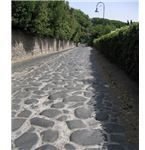
The building techniques were simple but effective as they reduced the travel time considerably and connected one place to another by land. The Appian Way in Rome still exists although it was constructed 2300 years ago. If Roman roads are considered the beginning of road construction, Telford Pavements are known as the second step of this process, followed by the Macadam Pavements that ultimately lead to the Bitumen Roads. Today, the concrete roads have added another dimension to stability and strength of the roadways.Road Construction Techniques
Modern road construction involves the removal of geographic obstacles, and the use of new construction materials that are far more improved and durable. Rock and earth is removed by explosion or digging. Embankments, tunnels, and bridges are constructed, and then vegetation is removed by deforestation, if necessary. Finally, the pavement material is laid by using a range of road construction equipment.
Roadways are basically designed and constructed for use by vehicles and pedestrians. Storm drainage and ecological considerations should be considered seriously. Sediments and erosion are controlled to avoid damaging effects. Drainage systems are constructed so that they should be able to carry waste water to a waterway, stream, river, or the sea.
- Importance of Earthwork
Earthwork is one of the major works involved in road construction. This process includes excavation, material removal, filling, compaction, and construction. Moisture content is controlled, and compaction is done according to standard design procedures. Normally, rock explosion at the road bed is not encouraged. While filling a depression to reach the road level, the original bed is flattened after the removal of the topsoil. The fill layer is distributed and compacted to the designed specifications. This procedure is repeated until the compaction desired is reached. The fill material should not contain organic elements, and possess a low index of plasticity. Fill material can include gravel and decomposed rocks of a particular size, but should not consist of huge clay lumps. Sand clay can be used. The area is considered to be adequately compacted when the roller movement does not create a noticeable deformation. The road surface finish is reliant on the economic aspects, and the estimated usage.
Bulldozers are some of the most important items of equipment used in road construction. Since a bulldozer is expensive, economic usage factors should be considered when using one. Bulldozers are extremely useful for road construction where it is possible to throw the waste excavated material on the road sides. Bulldozers may only be used if the slopes at the sides are not excessively steep. However, work on steep slopes can be accomplished by a bulldozer by using special techniques and expertise.
Construction of roads in challenging conditions is no more a difficult tasks because the binding agents and admixtures make it possible for the roads to last long and carry the heavy loads without cracking under tough environmental conditions. Use of recyclable materials for the construction of roads has added balance to the enviroment too. Construction Management of Roads
With ever increasing traffic and exponentially increasing vehicular load, construction management techniques have become the need of the hour. Managing maximum traffic in optimal space is what the world needs today. Safe designing of roads, highway space management and proper drainage of water are major aspects that the site engineers have to take care of. Construction management includes putting all the pieces of puzzle together, defining project objectives, dividing the project into modules and optimizing the available resources. Time, money and resource management are important aspects. Time saved is money earned, and that is where construction management techniques are helpful.
References
- Road Construction Techniques, Fao.org
- History of Roads, Washington.Edu
- Image: Remains Via Appia, Wikipedia
Sunday, January 26, 2014
In
Transportation
//
//
Leave a Comment
The administration of highway projects
 The administration of highway projects differs from one country to another, depending upon social, political and economic factors. The design, construction and maintenance of major national primary routes such as motorways or dual carriageways are generally the responsibility of a designated government department or an agency of it, with funding, in the main, coming from central government. Those of secondary importance, feeding into the national routes, together with local roads, tend to be the responsibility of local authorities. Central government or an agency of it will usually take responsibility for the development of national standards.
The Highways Agency is an executive organisation charged within England with responsibility for the maintenance and improvement of the motorway/trunk road network. (In Ireland, the National Roads Authority has a similar function.) It operates on behalf of the relevant government minister who still retains responsibility for overall policy, determines the framework within which the Agency is permitted to operate and establishes its goals and objectives and the time frame within which these should take place.
In the United States, the US Federal Highways Agency has responsibility at federal level for formulating national transportation policy and for funding major projects that are subsequently constructed, operated and maintained at state level. It is one of nine primary organisational units within the US Department of Transportation (USDOT). The Secretary of Transportation, a member of the President’s cabinet, is the USDOT’s principal.
Each state government has a department of transportation that occupies a pivotal position in the development of road projects. Each has responsibility for the planning, design, construction, maintenance and operation of its federally funded highway system. In most states, its highway agency has responsibility for developing routes within the state-designated system. These involve roads of both primary and secondary state-wide importance. The state department also allocates funds to local government. At city/county level, the local government in question sets design standards for local roadways as well as having responsibility for maintaining and operating them.
In
Transportation
//
//
Leave a Comment
Maintenance Considerations in Highway Design
 The future maintenance of a facility cannot be overemphasized in highway project design. Projects which are difficult or costly to maintain, or those which require frequent maintenance activities, must be considered poorly designed.
Different highway projects and different areas can be expected to have different maintenance considerations. Reduced or low maintenance designs with limited worker exposure should be the ultimate goal. In addition to a maintenance perspective review during project design, the development of a specific list of design practices may be appropriate to address maintenance needs in a particular area. Such a list might
include the following:
include the following:
- Acquire drainage easements when necessary to grade outfalls and thus provide adequate drainage. Avoid instances where adjacent property elevation is well above the drainage outfall as this may form a dam at the outfall to the structure.
- Where practical, try to match the drainage structure to the natural grade of the drainage channel, and then profile the roadway over the structure. This practice may reduce siltation in the structure and erosion at the outfall.
- Avoid placing signs in the ditch. Such placement may impede drainage (making mowing more difficult) and result in erosion or siltation around the sign support. Where practical, riprap mow strips around sign supports may minimize the need for herbicidal treatment.
- At exit gores, try to extend the riprap area to include any EXIT sign supports. Extending the riprap will eliminate the need to mow or hand trim around the sign supports and keep mowers further from traffic.
- Address access control variations (perhaps due to changes in property ownership) at ramp gores during design.
- Avoid the use of roadside barriers if the fixed object (culvert, large sign, steep slope, etc.) can be appropriately relocated or eliminated. The barrier itself represents a fixed object and should only be used where alternatives are impractical.
- When designing grade separations, consider extending riprap on the header banks of the overpasses all the way to the cross road pavement. This eliminates the need to mow or maintain a small strip of soil under the structure.
- Consider the provision of a narrow mow strip at the bottom or top of retaining walls to simplify mowing operations along the wall. Riprap considerations may also be appropriate in other locations (sign structures, narrow borders, etc.).
- Generally, designs should reduce the amount of hand trimming that would be required and eliminate the places that are relatively difficult for mowers to access.
- Provide access to areas requiring maintenance (mowing, bridge inspection, etc.).
To the extent practical, utilization of desirable highway design criteria recommended herein regarding maximum roadway sideslope ratios and ditch profile grades will reduce maintenance and make required maintenance operation easier to accomplish.
Wednesday, January 22, 2014
In
Transportation
//
//
Leave a Comment
Pavement technology for rural, city roads and highways
In our country the mindset of the people, even the scientific community needs to be changed.
In earlier days because of economically cheaper to concrete ,easy to built bituminous roads were popular in our country. But we now realise that though it is cheaper to make bituminous roads it is very costly to maintain them. The escalating cost of bitumen the bituminous road cost is increasing every year. It is observed that because of development of the admixtures it became possible to make concrete road which can open to traffic in three days. We have developed concrete technology for rural. city roads and highways
1)Rural roads
Thane unit of PMGSY (PRIME MINISTER GRAM SADAK YOGNA) laid in Murbad, Thane District first concrete road to connect Bhangarwadi 7KM away from main Bombay- Malcej highway
The technical details are as follows. The concrete is made using conventional equipments like 10/7 concrete mixer ,screed vibrator ,channel ,cutting machine etc.
The mix design is given below.
KG
Cement
|
250-300
|
Flyash
|
150-200
|
Crush sand
|
850
|
Metal 1
|
450
|
Metal 2
|
550
|
Admixture
|
3
|
water
|
140
|
The concrete cost is RS 4000/M3) The 150mm thick above concrete is laid over 150mm well compacted GSB layer. The last three years though the vehicular traffic is only bicycle, bikes. cars and bullock cards it is in good condition
The rural roads today the bituminous wearing course is worn out and the surface every were is of metalled one.It can be immediately surfaced by concrete roads.
2 City roads
Thane city is the excellent example of UTWT overlay.100-150mm thick concrete overlay over damaged bituminous roads .The city has laid 25km of roads in city
Thane municipal corporation has laid 25km of roads in city .They have ambitious plan of further 50km of UTWT roads in next two three yes
The mix design is given below
KG
Cement
|
380-400
|
Flyash
|
150
|
Crush sand
|
850
|
Metal1
|
450
|
Metal2
|
550
|
Admixture
|
4
|
Water
|
130-140
|
Economic
The cost of installing TWT overlay is compared with the Polymer modified bitumen mix( PMB) or crumb rubber bitumen (CRMB) mixes considering the five year bituminous mixes renewal period.
UTWT
|
PMB / CRMB
|
Concrete
| |
Rate, Rs. Per square meter
|
2200
|
1575
|
6000
|
Yearly repair cost
|
nil
|
100
|
0
|
Nil
|
100
|
0
| |
Nil
|
100
|
0
| |
Nil
|
100
|
0
| |
Renewal layer
|
nil
|
1575
|
0
|
Total after five years
|
2200
|
3550
|
6000
|
3)High ways
Reinforced UTWT of 200mm thickness is used. The reinforcement is of steel mesh of 6mm diameter fixed at the bottom of the road.
The mix design is given below
KG
cement
|
400-420
|
flyash
|
150
|
Crush stone
|
850
|
Metal1
|
450
|
Metal 2
|
550
|
admixture
|
4
|
water
|
130
|
The crore of rupees spent on maintenance of the bituminous roads can be saved by concrete roads.